
Technology shapes the theater experience long before the curtain rises. The microphones, speakers, lighting rigs, and video systems installed in your facility determine what your audience hears, sees, and feels. For theaters and performing arts centers, the stakes are high: a failed wireless mic, a feedback burst during a quiet scene, or a lighting system that cannot keep pace with a modern production design all become part of the audience’s memory of your organization.
The challenge most venues face is not a lack of good equipment options. It is understanding which systems fit the acoustic properties, sightlines, production demands, and operational realities of their specific space. Getting the system design right from the start prevents years of workarounds, costly retrofits, and audience experience problems that are difficult to explain and harder to fix.
Table of Contents
- Theater AV Solutions at a Glance
- Audio Systems for Theaters
- Video, Livestream, and Lighting Systems
- Theater AV by Space Type
- Production Communications and Control
- Theater Technology Consulting
- Discuss Your Project
- Frequently Asked Questions
Theater AV Solutions at a Glance
- Theater Sound Systems: Main reinforcement, distributed audio, and room-tuned DSP processing for consistent coverage and speech intelligibility
- Stage Audio Systems: Line arrays, delay fills, front fills, and orchestra pit systems for spoken word and musical performance
- Wireless Microphone Systems: Frequency-coordinated RF systems including body packs, handhelds, and instrument mics
- Theater Lighting Systems: Stage lighting, house lighting, intelligent fixtures, LED theatrical units, and DMX control infrastructure
- Projection and Video Systems: Front and rear projection for scenery, surtitles, and audience-facing content
- LED Video Walls: High-resolution LED panels for immersive digital scenery and dynamic visual environments
- Livestream and Recording Systems: Multi-camera capture, streaming infrastructure, and archival recording for live performances
- Production Communications: Intercom networks, stage management stations, production cueing, and backstage communications
- Theater Technology Consulting: Needs assessment, system design, acoustic planning, and budget development
Audio Systems for Theaters
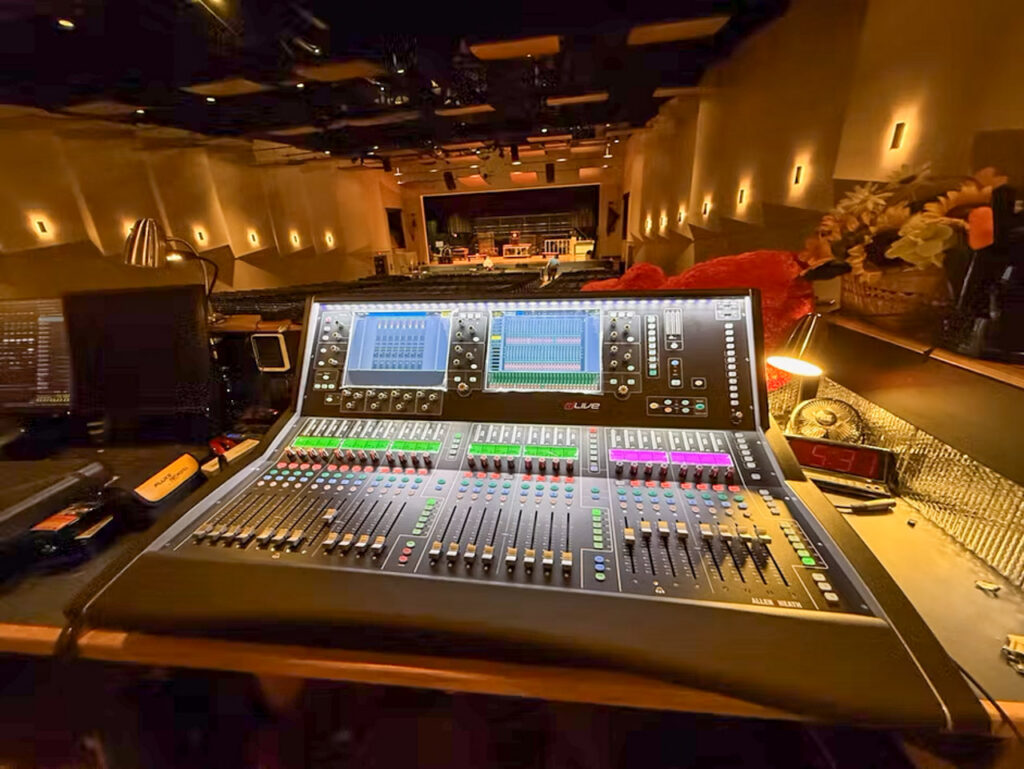
The audio system is typically the most complex and most noticed technology in any theater. When it works well, audiences do not think about it. When it does not, it defines the experience in the worst possible way.
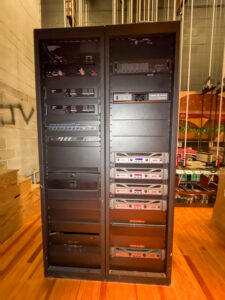 Main sound reinforcement in a theater generally involves a combination of line array systems flown at the proscenium or from delay positions, supplemented by front fills along the stage lip and center fills for even coverage. The configuration depends on room geometry, ceiling height, seating arrangement, and production types the space needs to support. Speech intelligibility is a measurable standard, not a subjective judgment, and a well-designed system achieves a Speech Transmission Index rating that allows every audience member to understand dialogue without effort. Industry guidance from AVIXA provides benchmarks that inform system design.
DSP processing is the backbone of modern theater audio. Digital signal processors handle room correction, delay alignment between speaker zones, feedback suppression, and dynamic gain management. Without a properly configured DSP, even high-quality speaker systems will underperform.
Wireless microphone systems for theater require careful RF coordination, particularly in dense urban areas where spectrum is crowded. A production with 20 or more wireless channels running simultaneously needs a frequency plan, antenna distribution system, and reliable receiver infrastructure. Shure and other leading manufacturers offer detailed technical resources on RF system design for performance venues.
Assistive listening systems are both a practical and a legal requirement. They should be designed as part of the audio system from the beginning, not added as an afterthought. Our audio systems integration services cover the full scope of theater sound design, from initial specification through commissioning and training.
Video, Livestream, and Lighting Systems
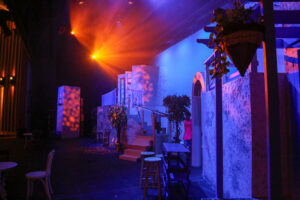 Modern productions use video as a primary design element, as dynamic scenery, as narrative support, and as atmosphere. Projection systems remain common for surtitles and rear-projection scenery. LED video walls solve the brightness problem that projection faces under stage lighting and offer greater flexibility for immersive scenic applications. Fine-pitch indoor panels in the 2.5mm to 4mm pixel pitch range are designed for viewing distances typical of most theater seating arrangements.
Livestreaming and archival recording have shifted from optional features to strategic assets for performing arts organizations. Community outreach, remote audience access, hybrid events, and educational programming all benefit from a capable recording infrastructure. A multicamera livestream setup requires independent audio feeds, a defined camera plan that preserves live audience sightlines, and an operator with production experience. Audiobahn Professional’s video and livestream integration services address the full range of theater video requirements.
Stage lighting in modern theaters increasingly relies on LED theatrical fixtures, which offer color mixing, reduced heat output, and significant energy savings compared to tungsten instruments. Intelligent moving fixtures add production value but require DMX and RDM infrastructure and operator training. House lighting is often treated as an afterthought, but it contributes directly to audience experience and energy costs. DMX infrastructure must be designed with future expansion in mind. Underpowered dimmer capacity and inadequate DMX runs are among the most common limitations in older theaters. Our lighting design and installation services cover stage and house systems for theaters of all sizes.
Theater AV by Space Type
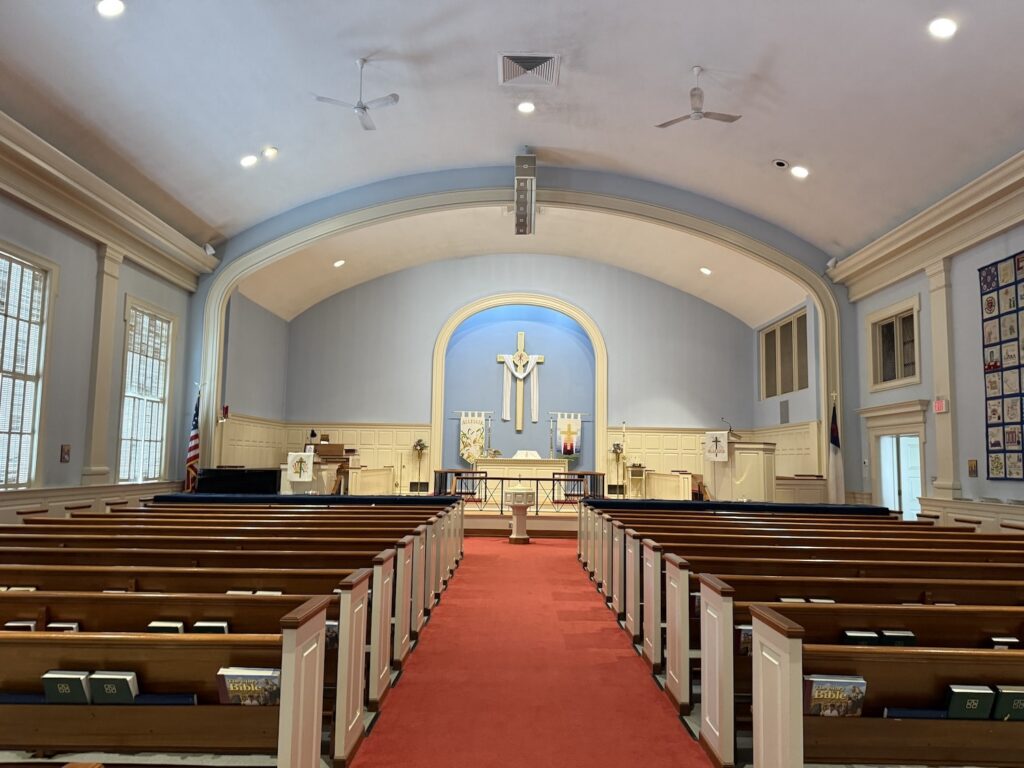
Proscenium Theaters: The defined relationship between stage and house creates predictable acoustic conditions, but the proscenium arch limits speaker placement options and balcony depth requires delay system management. Line arrays at the proscenium supplemented with balcony delays and front fills are standard.
Black Box Theaters: Variable seating configurations and intimate scale make coverage consistency critical. Distributed point-source systems with flexible rigging points for temporary configurations give black box venues the adaptability their programming requires.
Performing Arts Centers: Large facilities hosting symphony, opera, dance, and touring productions need systems capable of supporting all event types without full reconfiguration. Touring-ready infrastructure reduces friction with outside productions and protects the venue’s reputation.
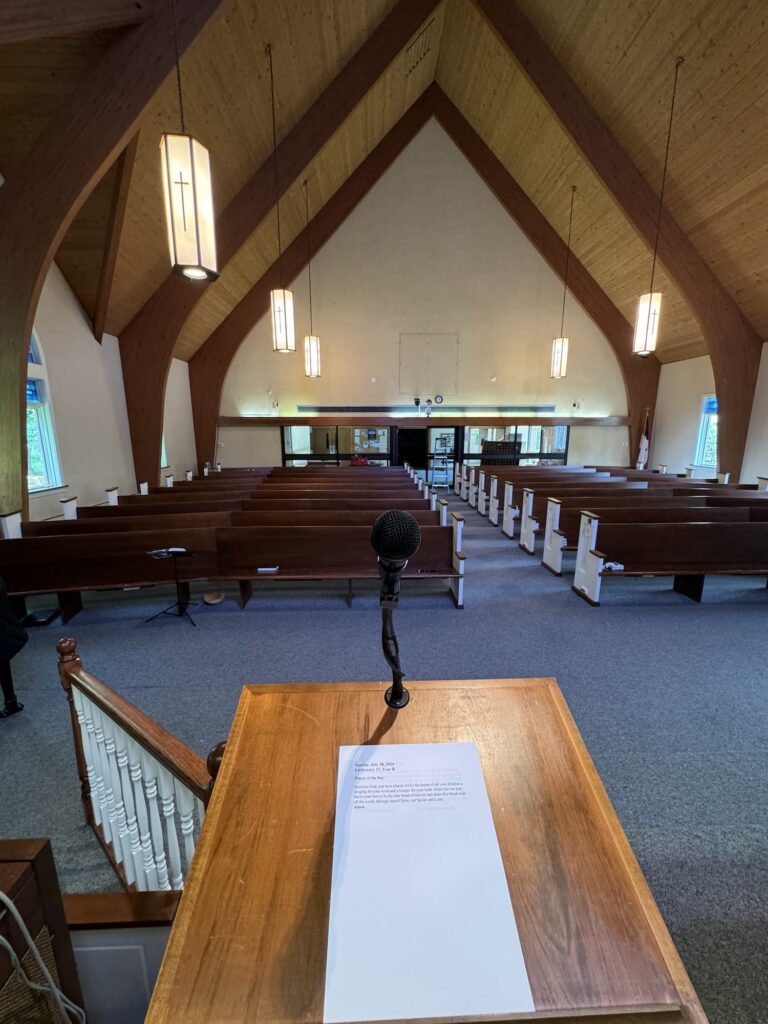
Community Theaters: System simplicity and ease of use matter greatly in volunteer-operated environments. A modest, well-designed audio system consistently outperforms an oversized system that production volunteers cannot operate reliably.
University and School Theaters: Academic spaces serve dual purposes: production venue and training environment. Students need to learn on systems that reflect professional practice. For K-12 performing arts spaces, our guidance for school AV solutions addresses the specific requirements of educational performing arts environments.
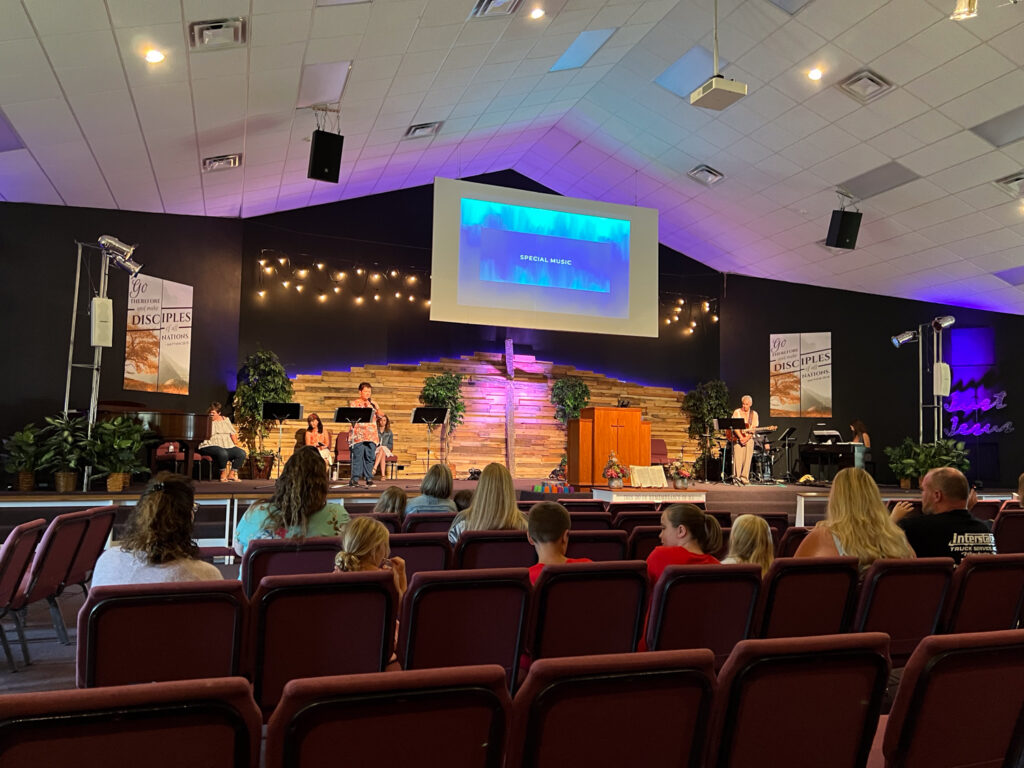
Multipurpose Auditoriums: Spaces that host both performances and non-theatrical events need systems designed for operational flexibility. Where theatrical use is one of several event types, the system design principles applied in corporate AV environments and performing arts venues need to be balanced carefully.
Production Communications and Control
Intercom is the nervous system of a live production. Without reliable communication between the stage manager, board operators, fly rail, follow spot operators, and running crew, productions fall apart in ways that skilled performers cannot recover from. Modern theater intercom systems range from analog party-line setups to digital matrix systems that allow any position to reach any other with the push of a button.
Production cueing systems, show control integration, and stage management displays are central to smooth productions. For facilities hosting complex productions, integration between departments requires careful signal routing documentation and planning. Systems integrators with live performance experience understand which failure modes matter most and how operators actually use the equipment under pressure.
Theater Technology Consulting
 Theater technology projects that skip the consulting phase tend to produce systems that do not quite fit the space, equipment choices made without full knowledge of production requirements, and budgets that surprise everyone at the contractor selection phase. A proper needs assessment involves conversations with artistic leadership, technical directors, facility managers, and board members because each group carries different priorities.
Budget planning benefits from honest early conversations about cost ranges. Equipment is one component; labor, conduit and cabling, structural work, commissioning, and training are others. Organizations that approach a project with a fixed budget before defining scope typically end up with compromised systems. Defining the system first, then developing a cost estimate, produces a more useful conversation about priorities. Technical guidance from NSCA and resources from manufacturers like Extron support the planning process with established standards and system design documentation.
Our AV consulting services are available as a standalone engagement for organizations in the planning phase. Getting expert input early costs far less than correcting mistakes after construction is complete. You can review examples of completed performing arts technology work on our projects page.
Discuss Your Theater Technology Project
Whether you are planning a new facility, renovating an existing space, or addressing specific system problems, the right starting point is a conversation. We work with theater directors, technical directors, facility managers, and arts administrators to understand what a space needs to accomplish, then develop system designs and integration plans that match those requirements and the organization’s budget.
Reach out through our contact page to start the conversation, or explore our services and project work to learn more about our approach to theater and performing arts technology.
Frequently Asked Questions
The right system depends on room geometry, seating capacity, production types, and budget. Most mid-size proscenium theaters benefit from a main line array system at the proscenium supplemented by front fills and balcony delay clusters. Smaller venues and black boxes often do well with distributed point-source systems. The design should be driven by acoustic modeling of the specific room, not by brand preference. DSP processing, properly configured for the room, matters as much as the speakers themselves.
Smaller productions may need 8 to 12 channels. Large musicals routinely use 20 to 30 or more. The practical limit is spectrum availability in your area, since urban environments have less clean RF spectrum than rural locations. A well-designed 16-channel system will outperform a poorly installed 24-channel system. Plan for more channels than your current largest show requires because productions tend to grow.
LED theatrical fixtures are now practical for most theater applications. Key considerations are color rendering (look for a high CRI and a TLCI rating above 90 for broadcast-adjacent applications), dimming behavior (fixtures should dim smoothly without color shift at low levels), and fixture quality. A theater that replaces a tungsten-primary rig with LED instruments can typically see lighting energy consumption drop by 50 to 70 percent.
Yes, particularly for productions that use video as a primary scenic element. Fine-pitch indoor LED panels are designed for viewing distances that align with most theater seating. Compared to projection, LED panels are brighter, perform better under stage lighting, and can be configured in non-rectangular shapes. The main considerations are rigging requirements, content playback infrastructure, and per-square-foot cost, which remains higher than projection for large areas.
Start with a needs assessment that documents what existing systems can and cannot do, and what production plans require. From that gap analysis, develop a prioritized list of improvements with rough cost estimates. For most theaters, audio system reliability and intelligibility represent the highest-impact first investment. A realistic multi-year technology plan gives leadership a framework for fundraising and grant applications that one-off equipment purchases cannot provide.
Waiting for systems to fail is the most expensive approach. A better framework is a technology assessment every three to five years that measures current performance against production requirements and current standards. For theaters undergoing physical renovation, that construction period is almost always the most cost-effective time to address AV infrastructure, since walls and ceilings are already open and scaffolding is in place.
Look for documented experience with performance venues specifically, and ask for references from technical directors who use the systems daily. At project completion, your team should receive complete as-built drawings, signal flow diagrams, equipment schedules, and configuration files for every programmable component. Structured operator training and documentation that survives staff turnover are signs of an integrator who thinks beyond project closeout.