Sound, video, livestream, and lighting systems that help every person hear clearly, see what matters, and engage in worship without distraction. Simple enough for volunteers, reliable enough for every Sunday.
Volunteer-friendly system design
Livestream-ready from day one
Serving clients for 30 years
Tell us about your space and what you need. We'll follow up to set a time.
Church audio visual solutions play a central role in how modern churches communicate, lead worship, teach Scripture, support volunteers, and reach people beyond the walls of the building. A well-planned system helps every person in the room hear clearly, see important content, follow the flow of service, and engage with worship without distraction.
Churches face a unique combination of needs. The system must support spoken word, live worship music, announcements, baptisms, funerals, weddings, youth services, children's environments, and online broadcasts, and it has to be simple enough for volunteers to run every week. When audio, video, lighting, and livestream technology are planned separately, churches end up with systems that technically work but don't work well together.
Audiobahn Professional helps churches evaluate, design, install, and upgrade worship audio visual systems with a practical understanding of ministry environments. From church sound systems and livestream upgrades to lighting design and church technology consulting, the goal is integrated systems that serve your mission, facility, volunteers, and congregation.
Every church has different ministry goals, room conditions, team capabilities, and budget priorities. Church AV systems should be designed around those realities, not treated as one-size-fits-all packages.
These systems may include microphones, loudspeakers, mixers, processors, cameras, switchers, projectors, displays, lighting fixtures, control systems, and network infrastructure. Organizations such as AVIXA provide professional resources for the AV industry, but churches need those best practices applied to worship, ministry programming, and volunteer operation.
Church Sound Systems
Worship Audio Systems
Church Livestream Systems
Video Projection & Displays
LED Walls
Worship Lighting Systems
Volunteer-Friendly Controls
Church Technology Consulting
Before selecting equipment, churches need to define what the system must accomplish. These four questions shape every good design.
01
A traditional sanctuary, modern worship center, portable church, gym, youth room, and chapel all need different decisions. The best solutions start with your worship style, teaching, music, online ministry, and the people who run the system.
02
People should hear the pastor clearly, follow lyrics, see sermon slides, and stay focused. For multi-generational congregations, that means balancing volume, visual brightness, accessibility, and room aesthetics.
03
Most churches rely on committed volunteers, not full-time production staff. Good church AV integration plans for startup procedures, labeled controls, presets, training, documentation, and troubleshooting.
04
You may not need extra cameras, distributed video, or campus-wide signage today, but conduit, cabling, networking, racks, and control infrastructure should be planned with expansion in mind.
The four systems that shape every worship experience, and how we approach each one.

Audio is usually the most important part of a worship environment because it directly affects teaching clarity and congregational participation. The pastor's voice needs to be clear in every seat, not just near the front, which takes the right microphones, loudspeaker placement, room tuning, gain structure, and signal processing.
Worship music adds another layer. Drums, guitars, keys, vocals, choir mics, and tracks all need to be managed so the music has energy without overpowering the room, with stage monitoring that fits your team, from wedges to in-ear systems. Manufacturers like Shure offer helpful resources on reliable wireless audio.
Acoustics matter as much as the equipment list. Through Audio Systems Integration, we evaluate your room and design church audio systems that are clear, reliable, and right for the space.

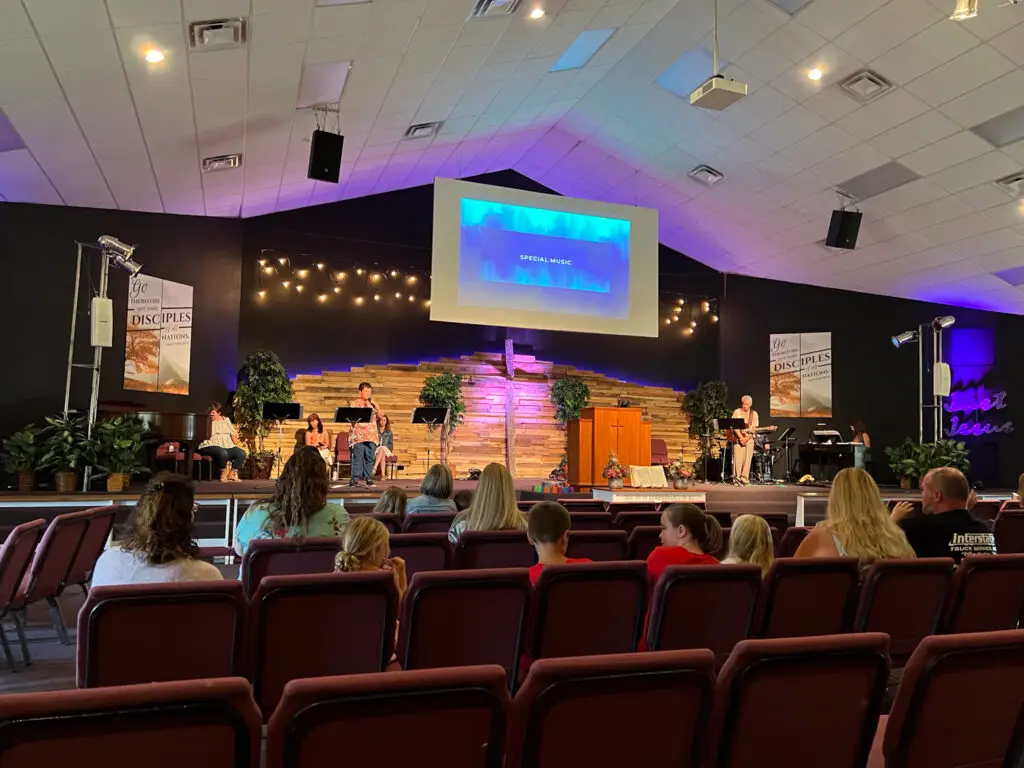
Church video systems help people follow worship, read lyrics and sermon slides, and stay engaged in larger rooms. That can include projection, flat panels, LED walls, confidence monitors, IMAG, lobby displays, overflow rooms, and digital signage.
Projection is still practical in many sanctuaries when ambient light can be controlled. LED walls deliver brightness and contrast but need structural planning, the right pixel pitch, and budget evaluation. Confidence monitors keep speakers and worship leaders facing the congregation.
Switching and presentation workflows should be built around your team. Video & Livestream Systems Integration aligns the full signal path from source to screen to stream.

For many congregations, livestreaming is a core part of ministry, serving people who are traveling, homebound, serving elsewhere in the building, or exploring the church for the first time. It should be planned as a complete system, not an afterthought.
Camera choices depend on room size, volunteer skill, and budget, from fixed cameras with presets to PTZ or staffed setups. Audio is often the most overlooked piece: a mix that sounds great in the room doesn't automatically sound good online, so many churches need a dedicated broadcast mix.
Reliability is critical. Encoders, network connections, backup procedures, and platform settings all need to be configured with Sunday morning in mind. Organizations like NSCA highlight the value of trained integration partners.

Church lighting shapes both the in-room experience and how your service looks on camera. Good lighting helps people see the pastor, worship team, choir, and baptisms clearly. Poor lighting makes a room feel flat and leaves livestream cameras struggling.
Front lighting provides even coverage on speaking and singing positions without harsh shadows or glare. Stage lighting adds depth and focus, while house and architectural lighting set the feel of the room. LED fixtures are efficient and flexible, but beam angle, dimming, color quality, and placement all matter.
Our Lighting Design & Installation team builds worship lighting that volunteers can run every week, with deeper programming available for special events.
Every room in your building serves a different purpose. Here's how we approach the most common spaces.

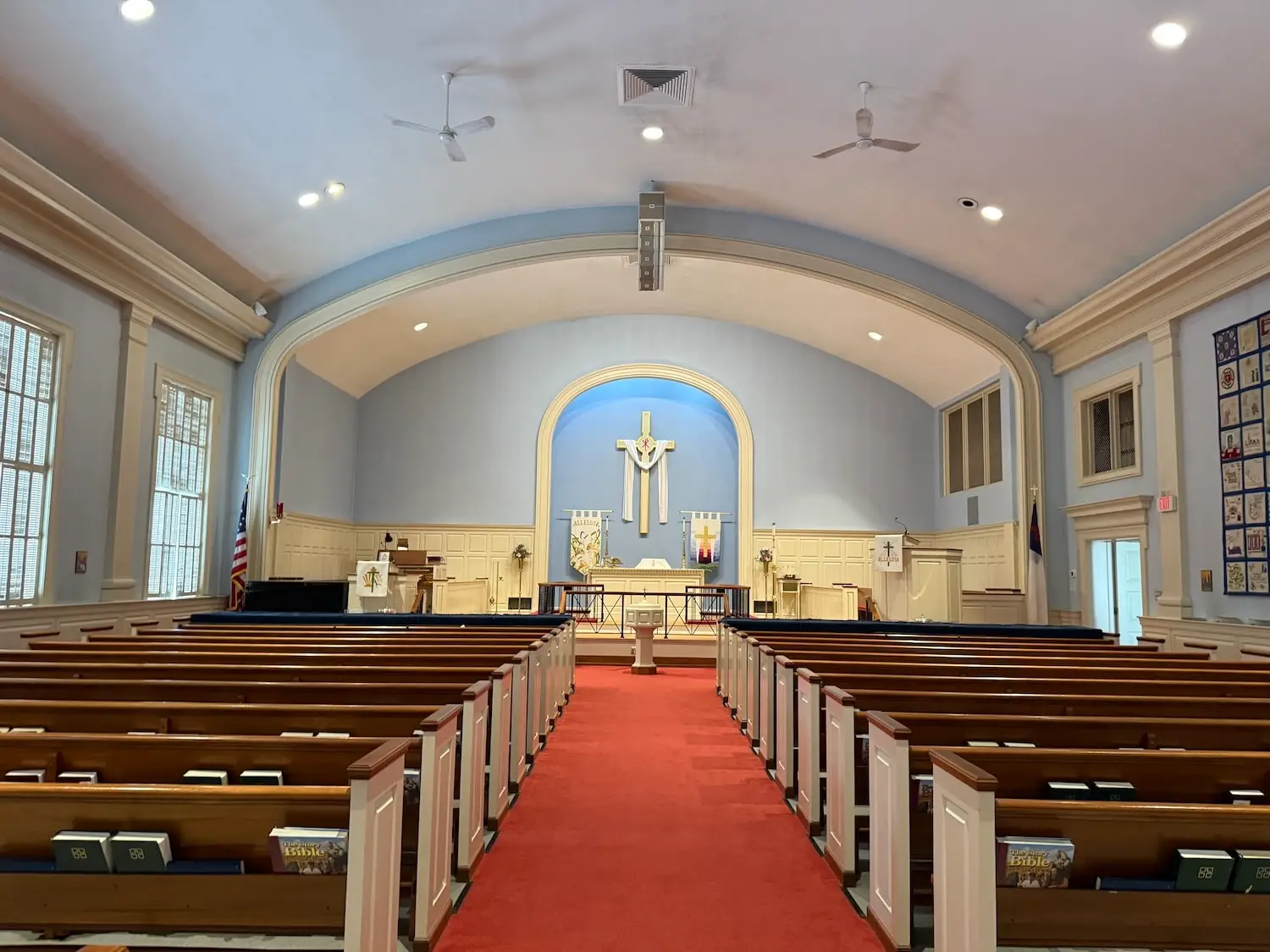
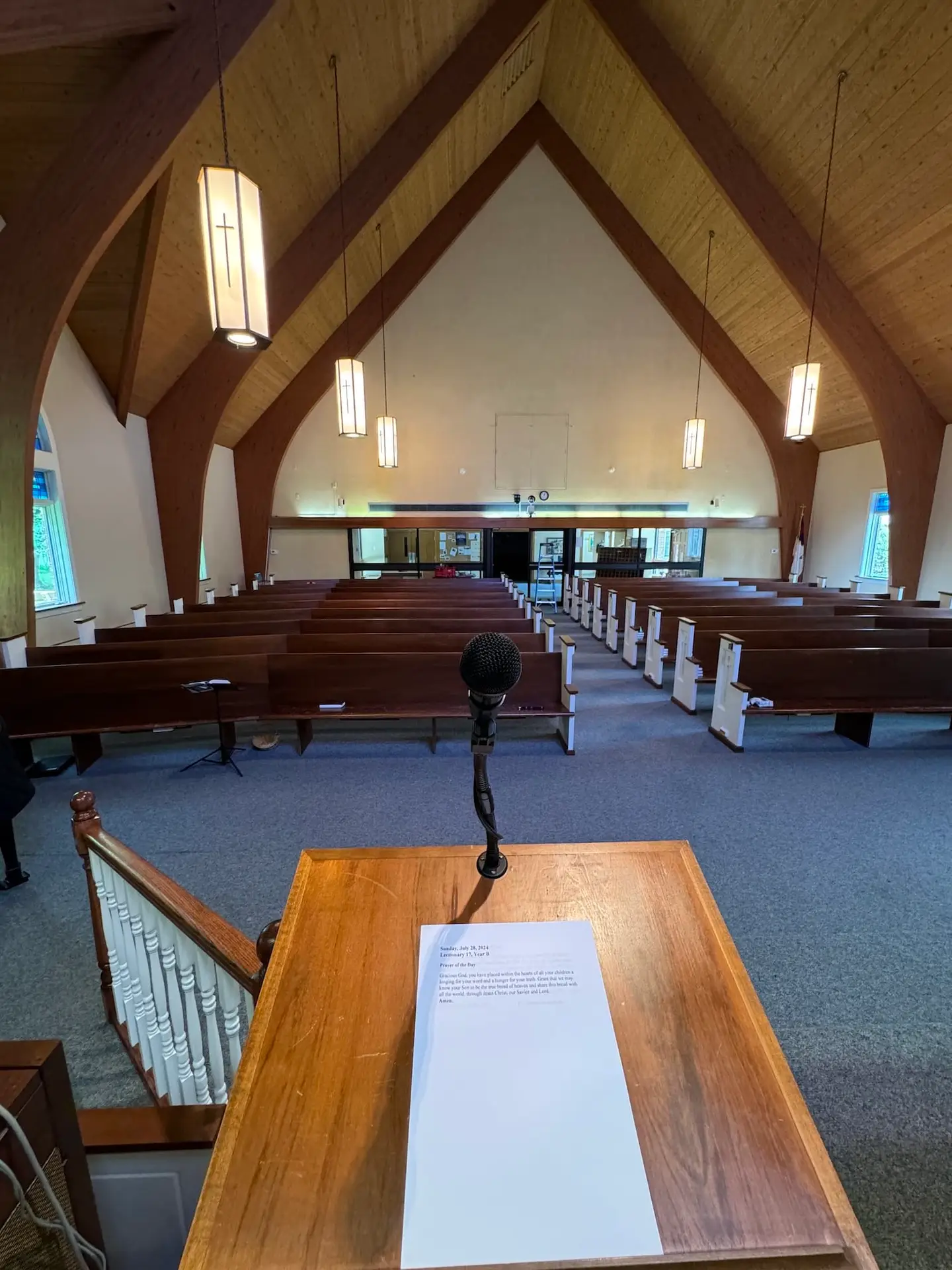
Usually the most complete systems: full-range audio, stage monitoring, projection or LED, livestream cameras, lighting control, and infrastructure ready for weekly worship, special events, and growth.

Flexible, durable systems for worship, teaching, games, and events. Audio, video, and lighting that create energy without needing a full production team.

Clear speech reinforcement, simple media playback, secure controls, and age-appropriate displays that staff and volunteers can run with ease.

Distributed audio, wireless mics, displays, and simple laptop inputs for meals, classes, banquets, church-wide gatherings, and overflow.

Gym one day, worship venue the next. Durable equipment, simple control, and scalable infrastructure that handles multiple room layouts.

A subtle approach: speech clarity, discreet speakers, and minimal visual distraction that supports worship without changing the character of the room.
Most of the churches we work with are dealing with at least one of these.
01
Older mixers, projectors, wireless mics, cabling, and lighting become unreliable and hard to support. We document your system, find the failure points, and plan upgrades in phases.
02
Many AV problems are workflow problems. Training, labeling, documentation, presets, and simplified controls reduce stress and improve consistency.
03
Hard surfaces, high ceilings, and reflective materials make speech hard to understand. Better speaker placement, tuning, acoustic treatment, and mic technique make a big difference.
04
Dark video, poor angles, inconsistent audio, weak internet, and unreliable hardware. A full evaluation covers cameras, lighting, broadcast audio, encoding, network, and workflow.
05
Separate essential needs from future enhancements, prioritize infrastructure, and avoid gear you'll replace too soon. A phased roadmap keeps every decision a wise one.
06
Worship centers, youth rooms, chapels, and fellowship halls need consistency. Shared standards for control, cabling, training, and equipment make support easier.
Good decisions now save money and frustration later.
Church technology consulting helps ministry leaders make informed decisions before money is spent on equipment. A needs assessment identifies what's working, what's failing, what can be reused, and what should be replaced, which is especially valuable for phased upgrades, capital projects, renovations, and new construction.
A technically impressive system isn't a success if your team can't run it consistently. Our AV Consulting Services help churches evaluate current systems, plan upgrades, and make technology decisions that fit their ministry.
Online ministry, hybrid worship, campus expansion, and new service formats all create future AV needs. Even a smaller project should consider cabling, network capacity, rack space, power, conduit, and equipment compatibility.
Planning for replacement cycles helps avoid emergency purchases, and scalable infrastructure lets you add cameras, lobby displays, or overflow video later without rebuilding the whole system.
The right partner understands both technology and ministry, and asks about worship style, volunteers, facility use, online ministry, and long-term goals before recommending equipment.
Training, documentation, and long-term support should be part of every project. Control systems from companies like Extron are powerful, but they still need to be designed around real users and real ministry workflows.
Professional church AV integration is about more than installing equipment. Audio, video, livestreaming, lighting, networking, control, power, and cabling all affect each other. Designed as one system, they give you fewer technical issues, better volunteer adoption, and more consistent services.
You get one opportunity each week to serve your congregation and reach guests. The best worship technology supports the message instead of distracting from it. Whether you're planning a new worship center, upgrading aging sound, improving your livestream, or building a long-term roadmap, we can help you find the next right step.
Don't see your question here? Give us a call or send a quick note and we'll get you an answer.

A church should begin by identifying the main problem. Common issues include poor speech clarity, uneven coverage, feedback, outdated equipment, inadequate monitoring, or a room that creates excessive reflections. The best solution may include new loudspeakers, better microphone systems, digital signal processing, acoustic treatment, system tuning, or volunteer training.
Cost depends on room size, system complexity, equipment quality, infrastructure needs, installation labor, and whether the project includes audio, video, livestreaming, lighting, or all of the above. A small room upgrade may be relatively modest, while a full worship center system can require a significant investment. A needs assessment and budget roadmap help churches prioritize wisely.
Many churches benefit from a dedicated livestream workflow, especially if online ministry is a long-term priority. A good livestream system may include cameras, video switching, encoding, broadcast audio, lighting adjustments, and network planning. The level of complexity should match the church's goals and volunteer capacity.
LED walls are not automatically better, but they can be a strong option in rooms with high ambient light, large stages, or a desire for bright, high-contrast visuals. Projection can still be effective and cost-efficient in many spaces. The right choice depends on room conditions, viewing distance, content type, budget, and maintenance expectations.
Yes, if the system is designed with volunteers in mind. Volunteer-friendly systems use clear signal flow, labeled controls, presets, training materials, and repeatable procedures. A system should be powerful enough to support ministry needs without being unnecessarily complicated.
Both approaches can work. A full upgrade may be best when systems are deeply connected or when a room is being renovated. Phased upgrades can be better when budget is limited or when the church wants to address the most urgent needs first. The key is to create a roadmap so each phase supports the next one.
Poor livestream audio often happens when the online mix is only a copy of the room mix. The room mix is influenced by stage volume, acoustic energy, and loudspeakers, while online listeners only hear what is sent to the stream. A dedicated broadcast mix, ambient microphones, processing, and proper routing can improve livestream quality.
A church should bring in an AV consultant before making major equipment purchases, beginning a renovation, launching a livestream, building a new room, or replacing aging systems. Early consulting helps prevent costly mistakes, clarify budgets, identify infrastructure needs, and create a plan that supports long-term ministry growth.
See how we’ve helped churches, schools, and venues transform their spaces with professional sound, lighting, and video systems designed for real-world use.
Every space has unique needs. We design and install custom audio, video, and lighting systems tailored to how your environment is used every day.
Design systems that support clear communication, powerful worship, and engaging experiences every week. From small sanctuaries to large auditoriums, we help your message be heard and seen.
Reliable AV systems built for assemblies, performances, and daily communication. We create solutions that are easy to use and built to last in high-use environments.
High-performance sound, lighting, and video systems designed for productions, concerts, and live events. Built for consistency, clarity, and impact.
Professional AV systems that elevate meetings, presentations, and events. Clean installs, intuitive controls, and dependable performance every time.
Whether you need a new sound system, upgraded video equipment, stage lighting, or a fully integrated AV solution, we're here to help. Fill out the quick form at the top of the page or reach out directly.