
Technology has become an essential part of modern education. From interactive classroom instruction and campus-wide communication to livestreamed events and performing arts productions, schools rely on technology every day to support teaching, learning, collaboration, and community engagement.
As educational technology continues to evolve, many schools face challenges related to aging infrastructure, inconsistent classroom technology, limited budgets, and growing expectations from students, staff, and parents. Whether planning a new facility, modernizing existing systems, or standardizing technology across multiple buildings, schools benefit from a strategic approach to audio visual system design and integration.
Effective school audio visual solutions are about more than installing equipment. Successful projects require thoughtful planning, user-friendly design, scalable infrastructure, and systems that support educational goals both today and in the future.
Audiobahn Professional helps educational institutions evaluate, design, and implement technology systems that improve communication, enhance learning environments, and support long-term operational success.
Table of Contents
- School AV Solutions at a Glance
- Understanding AV Requirements for Schools
- Core School AV Systems
- School AV Solutions by Space Type
- Planning, Consulting & Long-Term AV Strategy
- Choosing the Right School AV Integration Partner
- Discuss Your School AV Project
- Frequently Asked Questions
School AV Solutions at a Glance
- Classroom Audio Systems
- School Sound Systems
- Interactive Displays
- Auditorium AV Systems
- Campus-Wide Communication Systems
- School Livestream Systems
- Digital Signage
- Educational Technology Consulting
Educational audio visual systems support virtually every area of a school campus. From daily classroom instruction to emergency communication and community events, properly designed technology helps schools create more engaging, efficient, and connected learning environments.
Understanding AV Requirements for Schools
Every educational institution has unique technology requirements based on its size, age, curriculum, and facilities. A K-12 district may prioritize classroom standardization and campus communication, while a university may focus on lecture capture, hybrid learning, and large-scale presentation systems.
Regardless of institution type, several common objectives drive successful school AV integration projects.
Student Engagement
Students learn differently than previous generations. Modern classrooms increasingly incorporate multimedia content, interactive instruction, collaboration tools, and digital resources. Educational technology solutions should support active learning while remaining simple for educators to operate.
Teacher Effectiveness
Technology should enhance instruction rather than create barriers. Standardized classroom technology reduces training requirements and allows educators to move confidently between rooms and buildings.
Accessibility
Schools must support diverse learning needs. Audio reinforcement systems, assistive listening technologies, captioning capabilities, and visual communication tools can improve accessibility for all students.
Technology Standardization
Consistent equipment and user experiences simplify training, reduce support requirements, and improve reliability across campuses.
Scalability
Educational facilities continue to evolve. School AV systems should be designed with future growth, technology upgrades, and changing instructional needs in mind.
Core School AV Systems
 Audio Systems for Schools
Audio is one of the most important yet often overlooked components of educational technology. If students cannot clearly hear instruction, learning outcomes can suffer.
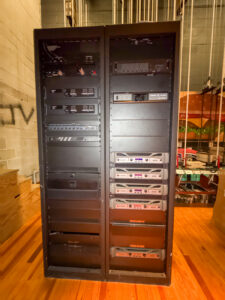
Modern classroom audio systems improve speech intelligibility and help ensure every student can hear instruction regardless of seating location. These systems often include teacher microphones, ceiling speakers, amplification systems, and digital signal processing.
Beyond classrooms, schools frequently require larger-scale Audio Systems Integration solutions for auditoriums, gymnasiums, performing arts centers, cafeterias, and athletic facilities.
Common school sound systems include:
- Classroom audio enhancement systems
- Paging and intercom systems
- Gymnasium sound systems
- Auditorium audio systems
- Wireless microphone systems
- DSP-based audio processing
- Assistive listening systems
Organizations such as Shure continue to provide educational resources regarding speech intelligibility and wireless microphone technologies used throughout educational environments.
Video & Display Systems
Visual communication has become central to modern education. Schools increasingly utilize interactive displays, projection systems, LED technology, and digital signage to support instruction and communication.
Interactive displays allow educators to present content dynamically while encouraging collaboration and student participation. Larger educational facilities may deploy centralized video distribution systems that allow content sharing between classrooms, administrative offices, and event spaces.
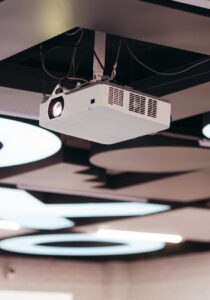 Many institutions are also replacing aging projectors with modern flat-panel displays that offer improved image quality, lower maintenance requirements, and longer lifecycles.
Common school video systems include:
- Interactive classroom displays
- Projection systems
- LED video walls
- Presentation systems
- Digital signage networks
- Video distribution infrastructure
- Lecture capture solutions
Schools evaluating display technologies often reference educational resources from Extron and industry standards published by AVIXA.
Comprehensive Video & Livestream Systems Integration helps ensure these technologies work together seamlessly.
Livestream & Communication Systems
School livestream systems have become increasingly valuable for both educational and community engagement purposes.
Many schools now livestream:
- Graduation ceremonies
- School board meetings
- Athletic events
- Performing arts productions
- Award ceremonies
- Community meetings
Livestream technology allows schools to engage parents, alumni, community members, and remote participants while creating valuable archives of important events.
In addition, modern communication systems support emergency notifications, digital signage messaging, campus announcements, and mass communication initiatives that improve campus-wide awareness.
Lighting Solutions for Educational Facilities
Lighting is often associated with theaters and auditoriums, but modern educational facilities utilize lighting technology in a variety of spaces.
Well-designed lighting systems improve visibility, support presentations, enhance performances, and provide flexibility for multipurpose spaces.
Educational lighting projects may include:
- Auditorium lighting systems
- Stage lighting systems
- LED lighting upgrades
- Architectural lighting
- Multipurpose room lighting
- Lighting control systems
Schools seeking flexible event and performance spaces often benefit from professional Lighting Design & Installation services that align lighting systems with the needs of educators, students, and facility managers.
School AV Solutions by Space Type
Classrooms
Classrooms require technology that is reliable, intuitive, and easy for educators to operate. Common systems include interactive displays, classroom audio systems, wireless presentation technology, and instructional video solutions.
Auditoriums & Performing Arts Centers
Auditoriums support assemblies, performances, ceremonies, presentations, and community events. These spaces often require sophisticated audio systems, stage lighting, video projection, recording capabilities, and livestream infrastructure.
Gymnasiums & Athletic Facilities
Athletic facilities require durable sound systems capable of delivering clear announcements, music playback, and event support in acoustically challenging environments.
Cafeterias & Multipurpose Rooms
Many schools use cafeterias and multipurpose rooms for presentations, meetings, performances, and special events. Flexible AV systems help these spaces adapt to changing needs.
Lecture Halls & Higher Education Spaces
Colleges and universities frequently require advanced presentation technologies, lecture capture systems, hybrid learning infrastructure, and collaborative learning tools.
Planning, Consulting & Long-Term AV Strategy
Common Technology Challenges Schools Face
Educational institutions often encounter similar challenges when evaluating technology improvements.
Aging technology infrastructure can create reliability issues and increase maintenance costs. Budget limitations frequently require phased implementation strategies. Inconsistent classroom technology can frustrate educators and increase support requests. Poor speech intelligibility can negatively impact learning outcomes, while communication challenges may affect safety and operational efficiency.
Technology adoption is another critical consideration. Even the most advanced system can struggle to deliver value if users are not properly trained and supported.
Budgeting for School AV Projects
Successful projects begin with realistic budgeting and long-term planning. Rather than focusing solely on equipment costs, schools should evaluate total ownership costs, including infrastructure, training, maintenance, and future expansion.
Many institutions use phased implementation strategies that allow upgrades to occur over multiple fiscal years while maintaining consistency across facilities.
Planning for Future Educational Technology Needs
Technology decisions should support future growth and changing educational models. Hybrid learning, distance participation, remote collaboration, and evolving instructional methods continue to influence technology requirements.
Schools should also consider technology lifecycle planning, infrastructure capacity, network readiness, and campus expansion opportunities when designing new systems.
Why Educational Technology Consulting Matters
Technology planning is often most effective when guided by a structured consulting process. Needs assessments, stakeholder interviews, infrastructure reviews, and technology roadmaps help schools make informed decisions while avoiding costly mistakes.
Audiobahn Professional provides AV Consulting Services that help educational institutions align technology investments with operational goals, instructional requirements, and long-term growth strategies.
Industry organizations such as NSCA also provide valuable guidance regarding technology planning, integration best practices, and project management standards.
Choosing the Right School AV Integration Partner
Selecting an AV integration partner is one of the most important decisions in any educational technology project.
Schools should look for partners who understand educational environments, provide comprehensive design services, develop detailed documentation, offer user training, and support systems after installation.
Professional integration helps improve system reliability, reduce support requirements, encourage teacher adoption, and maximize long-term return on investment.
Most importantly, experienced integrators focus on creating solutions that support educational outcomes rather than simply installing equipment.
Discuss Your School AV Project
Whether your institution is planning a classroom technology refresh, auditorium renovation, campus communication upgrade, or district-wide AV standardization initiative, thoughtful planning can help maximize the value of your technology investment.
You can explore examples of completed work on the Projects page or connect with Audiobahn Professional through the Contact page to discuss your educational technology goals.
Frequently Asked Questions
Many schools assume they need to replace every piece of technology at once, but that is rarely necessary. The most successful classroom technology upgrades focus on improving instructional consistency first. Standardizing displays, audio systems, and user interfaces across classrooms often delivers greater value than purchasing the newest equipment. A technology assessment can help identify which systems should be upgraded immediately and which can continue to provide value for several years.
Before budgeting for a complete replacement, schools should evaluate the condition, compatibility, and performance of existing infrastructure. Displays, speakers, cabling, network infrastructure, and control systems may still have useful life remaining. A professional assessment can identify opportunities to modernize critical components while reusing functional equipment, helping maximize available budgets.
One of the most common mistakes is purchasing equipment before defining educational goals and operational requirements. Technology decisions should be driven by how teachers, students, administrators, and staff will use the systems. Starting with a needs assessment often prevents overspending, reduces future compatibility issues, and improves long-term adoption.
Poor acoustics can significantly impact learning outcomes. Effective solutions may include classroom audio enhancement systems, distributed speaker systems, digital signal processing (DSP), acoustic treatments, and properly designed microphone systems. The goal is to ensure that every student can clearly hear instruction regardless of where they are seated.
The right solution depends on the learning environment and budget. Interactive displays are increasingly popular in classrooms because they offer bright images, touch functionality, and lower maintenance requirements. Projectors may still be appropriate for larger spaces such as lecture halls, auditoriums, and certain multipurpose rooms where image size is the primary requirement.
Livestream systems can extend the reach of many school events, including graduation ceremonies, school board meetings, athletic competitions, concerts, theatrical performances, awards programs, and parent information sessions. Modern systems can often be designed for operation by faculty or staff without requiring dedicated production personnel.
Many institutions use phased implementation strategies that spread costs across multiple budget cycles. Prioritizing critical spaces, standardizing technology across buildings, and developing a multi-year technology roadmap can help schools modernize facilities without overwhelming annual budgets. Grants, capital improvement funds, and bond initiatives may also support larger projects.
Educational technology consulting helps schools make informed decisions before purchasing equipment. A consulting process typically includes stakeholder interviews, infrastructure reviews, needs assessments, budget planning, and future growth considerations. This approach helps ensure that technology investments support educational objectives while avoiding costly redesigns or premature equipment replacements.