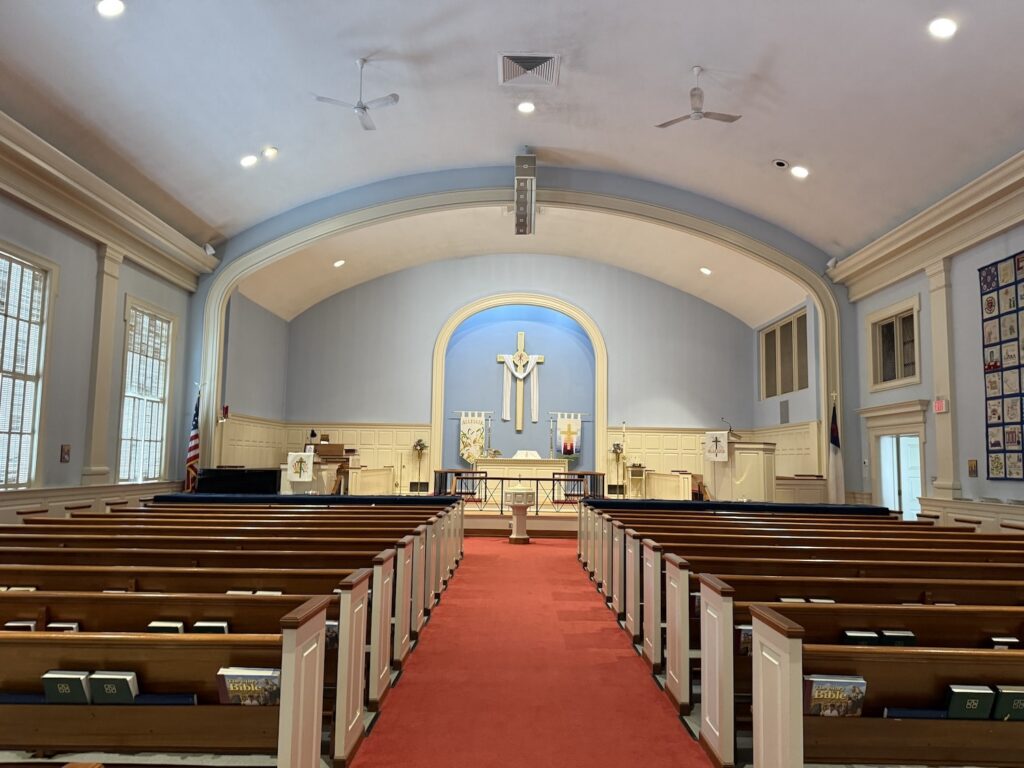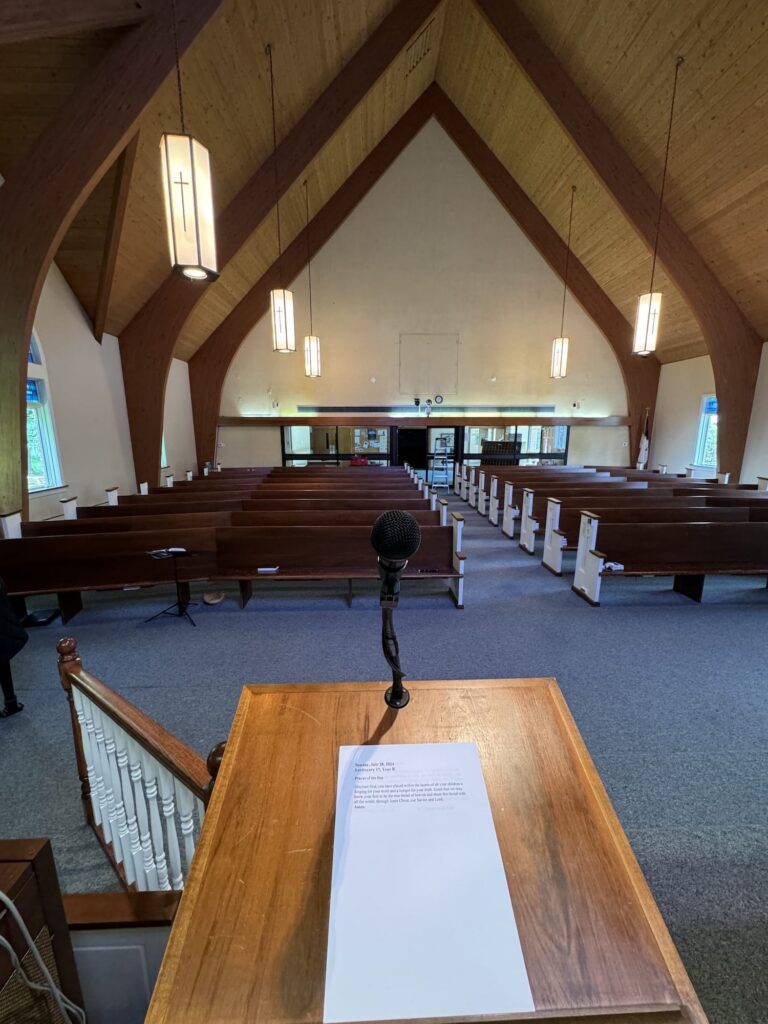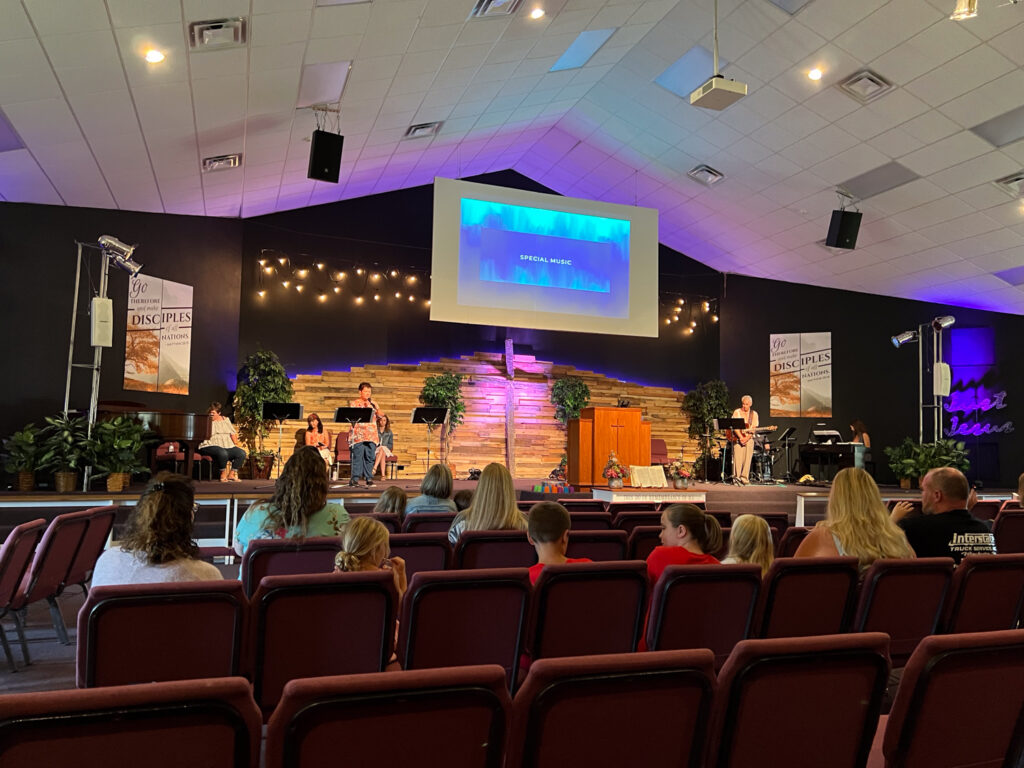

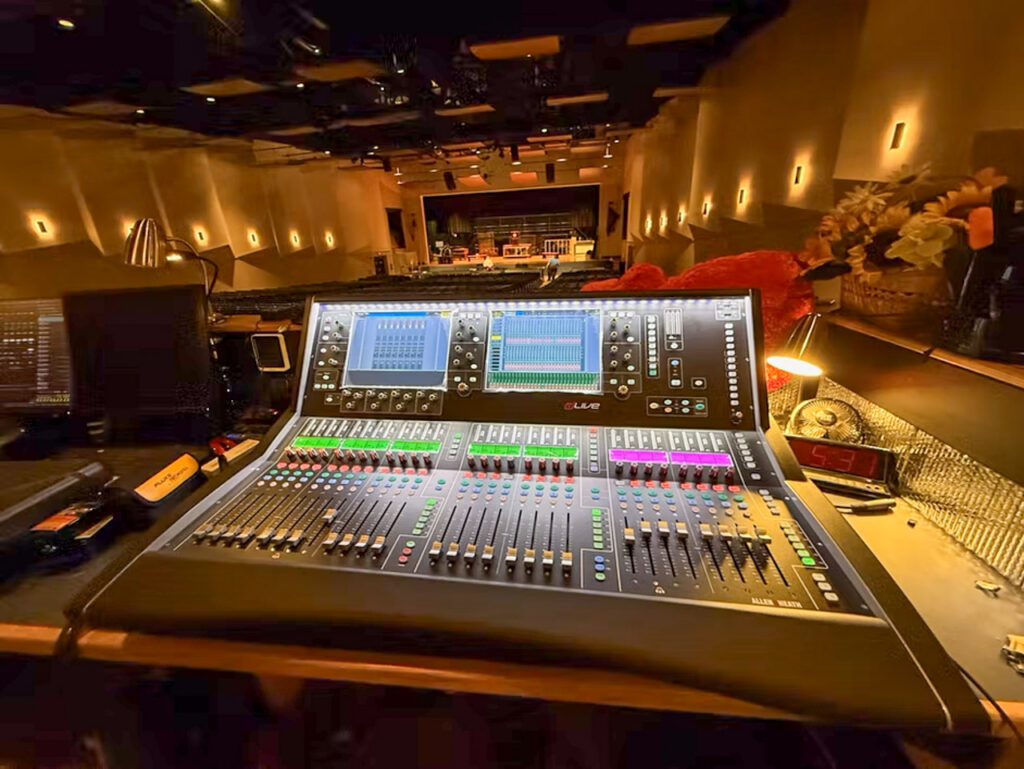
Audio problems in large facilities almost never get reported accurately. Nobody submits a work order that says the direct-to-reverberant ratio in the back third of the room is too low. What you hear instead is “the sound is terrible in the balcony,” or “people in the back can’t understand the pastor,” or “the microphone keeps squealing.” Those complaints are real, but they describe symptoms, not causes.
That gap matters because the wrong diagnosis leads to expensive, ineffective fixes. Facilities replace loudspeakers when the actual issue is coverage geometry, or buy new microphones when the real problem is a three second reverberation time. Below are five distinct problems that show up repeatedly in churches, schools, theaters, auditoriums, corporate spaces, and community facilities, along with what causes each one, what corrects it, and when it calls for professional evaluation instead of another round of guesswork.
Key Takeaways
- Most audio problems in large facilities come from room acoustics, loudspeaker coverage, system configuration, or microphone technique, not from failed equipment.
- Poor speech intelligibility and inadequate volume are different problems. A louder system in a reverberant room usually makes intelligibility worse.
- Feedback is a function of system geometry and gain structure, not just fader position.
- Coverage uniformity is measurable and has published performance standards. It does not have to be a matter of opinion.
- DSP can shape what a loudspeaker sends into a room, but it cannot remove reverberation already there.
- A professional evaluation identifies which issues you actually have before money gets spent.
Table of Contents
- Poor Speech Intelligibility
- Uneven Sound Coverage
- Feedback and Limited Gain Before Feedback
- Reverberation, Echo, and Background Noise
- Aging, Misconfigured, or Undersized Systems
- When to Have the Whole System Professionally Evaluated
- Frequently Asked Questions
1. Poor Speech Intelligibility
What it sounds like
This is the most common and most misdiagnosed of all commercial audio problems. People can clearly hear that someone is speaking. They cannot tell what the words are. Consonants disappear, sentences blur together, and listeners lean toward a neighbor to ask what was just said. Anyone with hearing loss, anyone processing English as a second language, and children all need a better signal than a young adult with normal hearing, so those listeners lose the message first.
Why it happens
Intelligibility depends on how much direct sound from the loudspeaker reaches a listener compared to reflected sound and background noise. Volume is only one input. Common contributors include loudspeakers chosen for broad music playback rather than pattern-controlled speech reproduction, listeners sitting well past the distance where reflected energy overtakes direct sound, elevated noise from HVAC, and equalization pushed toward low-frequency warmth at the expense of the 2 kHz to 4 kHz range where consonants live.
Microphone technique is a large and underrated factor. A lavalier sitting six inches below the chin picks up a very different signal than a headworn microphone at the corner of the mouth, and no amount of downstream processing rebuilds what was never captured.
The acoustics side is quantified in published standards. The classroom acoustics standard from the Acoustical Society of America caps unoccupied background noise at 35 dBA and reverberation time at roughly 0.6 to 0.7 seconds in core learning spaces, specifically because both figures govern whether speech is understandable. Most large assembly rooms exceed both numbers substantially.
How it gets corrected
The productive sequence starts upstream. Get the cleanest possible source signal through microphone selection and placement, then set gain structure so the console and DSP operate in their intended range. From there, corrective equalization usually means cutting buildup in the 200 Hz to 500 Hz region rather than boosting highs, which only raises noise and feedback risk along with it.
If intelligibility stays poor after that work, the issue is in the loudspeaker coverage or the room itself. Pattern-controlled loudspeakers aimed at seating rather than at walls and ceilings, or a distributed system with time-aligned delay loudspeakers, reduce the energy exciting the room and shorten the distance between each listener and their nearest source. That is a design change, not an adjustment, and it warrants measurement. One reliable signal that the problem is structural: intelligibility is acceptable in the first several rows and collapses further back.
2. Uneven Sound Coverage
What it sounds like
Volume changes depending on where you sit. The front rows find the system uncomfortably loud while the back rows strain. Seats under a balcony sound muffled. Staff respond to complaints from the back by turning up, which generates complaints from the front, and the system settles into a permanent compromise that serves nobody well.
Why it happens
Sound pressure drops predictably with distance, so one loudspeaker position covering a deep room will always produce a significant level difference between the nearest and furthest seats. Uneven sound coverage usually traces to too few loudspeakers covering too much area, dispersion patterns that do not match the shape of the seating, or loudspeakers mounted where the structure made mounting convenient rather than where coverage required. Balconies, wide fan-shaped seating, cafeterias doubling as assembly spaces, and rooms renovated since the install all produce gaps.
Coverage uniformity is not subjective. AVIXA publishes a performance standard for audio coverage uniformity in listener areas that defines how to measure the consistency of early arriving sound across a seating area and classify the result. If someone tells you coverage is fine because it sounds fine from the mix position, that is one data point from one seat.
How it gets corrected
Sometimes very little hardware changes. Re-aiming existing loudspeakers, swapping a horn or waveguide for a more appropriate pattern, and rebalancing levels and equalization by zone in the DSP can resolve moderate unevenness. Adding fill loudspeakers for under-balcony seating, and delay loudspeakers time-aligned to the mains for deep rooms, addresses gaps without replacing the main array.
When the seating shape and the loudspeaker pattern fundamentally do not match, a redesign is the honest answer. Either way, the decision should follow measurement across the seating area, not a walkthrough. Professional audio systems integration starts with defining the listener areas and verifying what the existing system delivers to each of them.
3. Feedback and Limited Gain Before Feedback
What it sounds like
The obvious version is a squeal or howl. The more damaging version is quieter: a system that always feels one small move away from ringing. Operators ride faders defensively. Presenters get told not to walk past a certain point. Choir and panel microphones stay so low they contribute almost nothing, and the system never reaches a useful level because nobody trusts it to stay stable.
Why it happens
Audio feedback problems are a geometry issue before they are a volume issue. Available gain is set by the distance from the talker to the microphone, the distance from the loudspeakers to the microphone, the microphone’s pickup pattern and how it is aimed, how many microphones are open at once, and how reverberant the room is.
The number of open microphones matters more than most people expect. As Shure notes in its technical guidance on how feedback actually behaves, each doubling of the number of open microphones reduces available system gain by about 3 dB. An eight-microphone panel with every channel live has given up roughly 9 dB before anyone touches a fader. Other common contributors: microphones sitting inside a loudspeaker’s coverage pattern, lavaliers placed far from the mouth, and broad EQ boosts used to compensate for a weak source.
How it gets corrected
Reducing the source-to-microphone distance is the single most effective change available, which is why headworn microphones solve feedback problems that fader work never could. Halving that distance yields a substantial gain increase while room noise stays the same. Beyond that: automatic mixing or gating so unused microphones are not contributing, loudspeaker positioning that keeps energy off the microphone zone, and narrow parametric cuts at the frequencies that ring first rather than broad tonal changes that hollow out the system.
Automatic feedback suppression is a final safety layer, not a design strategy, and a system that relies on it has an unresolved structural problem. If a single microphone at a normal speaking level feeds back, the geometry is wrong and no operator technique will fix it.
4. Reverberation, Echo, and Background Noise
What it sounds like
Speech washes together and trails off rather than stopping cleanly. Applause rings for a beat after it ends. You hear a distinct slap off the rear wall after a loud sound. Music may sound rich and full in the same room where speech sounds like mush, which is a genuine conflict rather than a contradiction. The background noise half of this problem is easier to overlook: HVAC diffusers, projector fans, and dimmer buzz raise the floor every spoken word has to clear.
Why it happens
Large rooms with hard, parallel, reflective surfaces are the usual culprits: gymnasiums, atriums, sanctuaries with masonry and glass, multipurpose rooms with drywall and polished floors, older auditoriums built for unamplified performance. Reverberation is a property of the room, produced by its volume and surface materials, and it exists whether the sound system is on or off.
How it gets corrected
Two paths, usually combined. Acoustic treatment reduces reflected energy, and placement matters enormously. Absorption installed where the significant reflections originate does real work, while panels placed wherever there was open wall space often do very little. Treatment also has to be balanced against the room’s other uses, since a sanctuary can be over-deadened to the point that music suffers.
The system-side path is reducing how much energy hits reflective surfaces at all, through pattern-controlled loudspeakers aimed at seating and distributed or delay systems that get adequate level to each listener at lower overall output. What does not work is expecting DSP to remove reverberation. Processing shapes the signal a loudspeaker sends into a room. Once that energy is in the air, the room decides what happens to it. Weighing treatment against system changes should be informed by measured reverberation time and noise floor data, often with an AV consultant and an acoustician coordinating.
5. Aging, Misconfigured, or Undersized Systems
What it sounds like
Intermittent dropouts. A crackle when someone moves a cable. A steady hum under everything. One channel that stopped working two years ago and became permanent. Wireless microphones that drop out in the same spot every time. A system that needs a reboot before every service, or distortion that shows up only when the room gets loud.
Why it happens
These are the genuine equipment problems, and they are less common than facilities assume. Real causes include ground loops producing hum, failing connectors and terminations, amplifiers undersized for the demand and clipping when pushed, and wireless operating in congested spectrum.
Just as often the hardware is fine and the configuration is not. DSP settings get edited over the years by people solving one immediate problem at a time, with no documentation and no backup of the commissioned state. Gain structure drifts until input trims sit too low and faders live at the top of their travel, or the reverse. Platforms reach end of support while staff turnover erases any knowledge of how it was supposed to work.
How it gets corrected
Start with verification rather than replacement. Confirm gain structure through the whole chain, inspect cabling and grounding, review the DSP configuration against what the system is supposed to do, coordinate wireless frequencies, and update firmware where support still exists. Lock user-accessible parameters so well-intentioned adjustments do not undo the work, and keep a backed-up configuration file.
Replacing loudspeakers will not fix a clipping amplifier, a ground loop, or a broken gain structure. A commercial sound system genuinely at end of life has specific markers: components no longer supported or serviceable, a platform that cannot integrate with current needs like livestream or hybrid meetings, or a design that never matched the room. Examples of that work are visible across completed integration projects.
When to Have the Whole System Professionally Evaluated
Individual troubleshooting is worth doing. But some situations call for evaluating the professional audio system as a whole:
- Complaints keep recurring after multiple attempted fixes.
- The room has been renovated, reconfigured, or expanded since the system was installed.
- How the space is used has changed, including added livestreaming, hybrid meetings, or new event types.
- The staff or volunteers who understood the system have moved on and nobody can explain the current configuration.
- Equipment is reaching end of support and a capital request is coming.
- You are being quoted for new equipment without anyone measuring what the existing system currently delivers.
A proper evaluation combines critical listening throughout the seating area with measurement of coverage, reverberation time, and background noise, plus review of the signal chain, DSP configuration, and how the system is operated day to day. The output should be a clear picture of which problems are acoustic, which are design, which are configuration, and which are genuine equipment failures, and what each one costs to address. That is what makes a budget defensible.
Frequently Asked Questions
Why can people hear the sound but not understand the words?
Intelligibility depends on the ratio of direct sound to reflected sound and background noise, not volume alone. In a reverberant room, increasing level raises both the speech and the energy competing with it, so words can get harder to follow as the system gets louder.
Does poor sound mean we need new loudspeakers?
Often not. Coverage problems can frequently be improved by re-aiming existing loudspeakers, adding fill or delay loudspeakers, or correcting DSP zone settings. Replacement makes sense when the pattern fundamentally does not match the room, when components have failed, or when the system was undersized from the start.
Can DSP fix a room with bad acoustics?
No. DSP shapes the signal sent to the loudspeakers, which is useful and often necessary, but it cannot remove reverberation or echo, because those are created after sound leaves the loudspeaker. The system-side contribution is better pattern control and shorter listener distances, not more processing.
Why does feedback happen even when the volume is not high?
Because available gain is determined by distances and microphone patterns, not fader position. A microphone far from the talker, positioned inside a loudspeaker’s coverage, in a reflective room, will have very little usable gain regardless of where the fader sits. Multiple open microphones reduce it further.
How long should a commercial sound system last?
Well-installed systems commonly serve for many years, and loudspeakers often outlast the electronics around them. The practical limit is usually manufacturer support and serviceability of processors, amplifiers, and control components. Age alone is not a reason to replace a system that performs.
Should we do acoustic treatment or a new sound system first?
Measure before deciding. If reverberation time and noise floor are the dominant issue, a new system in an untreated room will disappoint. If the acoustics are reasonable and coverage or configuration is the failure point, treatment will not solve it. Many facilities need some of both.
Get in contact with us
Audiobahn Professional designs, installs, integrates, and supports permanently installed audio systems for churches, schools, theaters, performing arts centers, businesses, and community facilities across Greater Philadelphia and nationwide. If your space has an audio problem that has not responded to the obvious fixes, we can tell you what is actually causing it. Contact Audiobahn about your audio system to start the conversation.